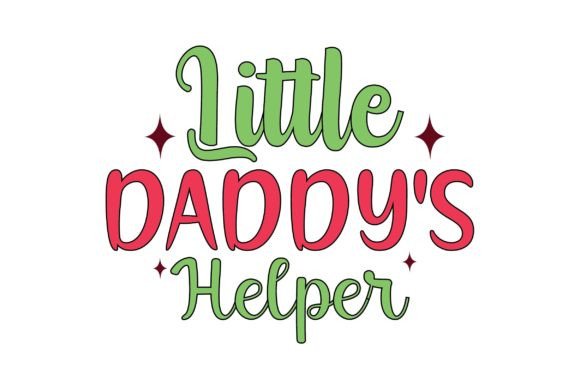
Understanding Daddy's Little Helper: A Practical Guide to SVG, DXF, EPS, PNG, and Ai Design Files
When you come across a design bundle like Daddy's Little Helper, the immediate appeal is often the artwork itself. But beneath the surface, the real value lies in the file formats that come with it. For anyone working with cutting machines, screen printing, or digital design, the difference between a good set of files and a frustrating one often comes down to whether the formats match your workflow. This article walks through what makes Daddy's Little Helper distinct, how the included file types compare, and how to decide if it fits your project needs.
What Daddy's Little Helper Offers Beyond the Artwork
Daddy's Little Helper is a vector-based design set built around a specific theme. What sets it apart is not just the style or sentiment of the graphics, but the range of adaptable file formats packaged together. Each format serves a different purpose, and having all of them in one download means you can move between projects, software, and machines without rework.
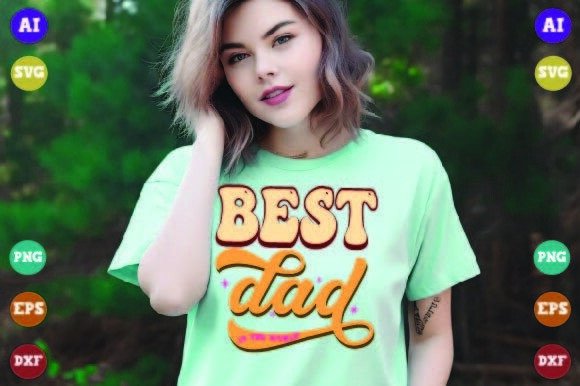
The bundle includes SVG, DXF, EPS, PNG, and AI files. This range covers everything from web-ready transparent images to fully editable vectors for custom resizing. For someone who routinely switches between Adobe Illustrator and a Cricut or Silhouette machine, having these options saves considerable time. For a beginner, it can be the difference between a project that works on the first try and one that stalls because of an incompatible file type.
The design is built entirely with vector shapes, which means every element is mathematically defined rather than made of pixels. This gives you infinite scalability without quality loss. Whether you are printing on a small sticker or a large poster, the edges stay sharp. The files are also set at 300 dpi for the PNG version, so even the raster option holds up well for screen use and light printing.
Comparing the Included File Formats: Which One Fits Your Workflow
Each file type in Daddy's Little Helper targets a specific use case. Understanding the differences helps you match the right format to your hardware and software.
SVG – For Cutting Machines and Modern Design Tools
The SVG file is the go-to format for Cricut Explore users, Silhouette Designer Edition owners, and anyone working with Adobe Suite, Inkscape, or Corel Draw. SVGs are natively supported by most modern design and cutting software, meaning you can import them directly without conversion. They maintain the vector integrity of the design, so resizing is clean and fast. If you own a Cricut, this is likely the first file you will open. The file can also be modified easily because the vector paths remain fully editable.
One tradeoff: SVG is not always the best choice for high-resolution print production. While it works well for cut lines, stickers, and apparel, professional print shops sometimes prefer a PDF or high-res TIFF for offset printing. For most home and small shop projects, though, the SVG will serve you well.
DXF – For Silhouette Users and CAD-Like Workflows
The DXF format is particularly useful for Silhouette owners who use the free software version. Unlike SVG, which is often supported out of the box, DXF has long been a standard for CAD and cutting machine users. It opens cleanly in Silhouette Studio and retains the vector outlines needed for precise cuts.
However, DXF files are less flexible for editing than SVG or AI. If you plan to heavily modify the shapes, you may find the DXF version more limited. It is best used as a ready-to-cut file rather than a starting point for redesign. For someone who only needs to load and cut, it is perfect. For a designer who wants to tweak every curve, the SVG or AI version will be more accommodating.
EPS – For Professional Vector Editing
The EPS file is a veteran in the vector world. It opens in Adobe Illustrator, Inkscape, Corel Draw, and many other professional design applications. If you are working in a print shop or a studio that relies on legacy software, EPS is often the safest bet. It supports complex vector data and color information, making it ideal for high-end printing and branding work.
The main limitation of EPS is that it is less commonly used in hobbyist cutting machines. While it can be converted, the SVG or DXF will usually give you a smoother path from file to cut. EPS shines when you need to hand the design off to a commercial printer or integrate it into a larger layout.
PNG – For Immediate Use Without Editing
The PNG file in Daddy's Little Helper comes at 300 dpi with a transparent background. This is the format you grab when you need to use the design right away, no software required. It works for print-on-demand mockups, social media graphics, digital scrapbooking, or any situation where a transparent image is needed without loading a vector editor.
The tradeoff is that a PNG, even at high resolution, is still a raster image. Scale it up too much, and you will hit pixel boundaries. For small to medium prints, 300 dpi is excellent. But if you plan to blow the design up to banner size, you will want to return to the vector versions for a clean result.
AI – For Full Control Over Color and Structure
The Adobe Illustrator file is included for those who want maximum control. The AI file lets you change color formats, edit individual paths, and reorganize layers. If you are a designer who needs to match the design to a brand palette or create variations, the AI file is your workspace. Because the design is made with 100 percent vector shapes, every element is independently resizable and recolorable.
The catch: you need Adobe Illustrator to edit the AI file, or a vector app that supports the format. Inkscape can open some AI files, but the translation is not always perfect. If you do not have access to Illustrator, the SVG or EPS versions will give you similar editing freedom with wider software compatibility.
Strengths and Tradeoffs You Should Consider
One of the most practical strengths of Daddy's Little Helper is the completeness of the file set. You rarely get AI and EPS alongside SVG and DXF in a single download. For someone who works across multiple machines or collaborates with others using different software, this eliminates the need to request additional formats or run conversions that might degrade quality.
Another strength is the 300 dpi PNG. Many vector bundles either skip the raster version or offer a low-resolution image. Having a print-ready PNG means you can use the design in mockup generators, websites, or quick prints without touching a vector program. That is a time saver for small business owners or crafters who want to move fast.
However, there are tradeoffs to be aware of. The design itself is thematic, which means it may not suit every project. If your audience or client does not connect with the "Daddy's Little Helper" concept, the file formats are irrelevant. Also, while the vector files are editable, the level of complexity in the design may require some comfort with vector editing software. A complete beginner might need to watch a few tutorials before resizing or recoloring effectively.
When Daddy's Little Helper Is the Right Choice
This bundle is a natural fit for anyone creating personalized gifts, family-themed apparel, or keepsakes where the sentiment is part of the appeal. If you run a small shop that makes custom onesies, tote bags, or mugs, having all five file formats means you can serve customers who use different machines without extra work. The design is also suitable for scrapbooking and memory crafts, especially when the theme matches the occasion.
For educators or parents who create classroom materials, the PNG version offers a quick way to add graphics to worksheets, while the SVG and DXF provide cut files for physical projects. If you teach a class on using cutting machines, having a multi-format bundle lets you demonstrate the same design across different hardware.
When You Might Need Another Option
If your project requires full photographic detail or a large number of color gradients, a vector design may not be the best starting point. Vector art excels at flat color and clean lines, which is ideal for cut files and screen prints. But if you need a highly detailed, realistic image, you would likely work with a Photoshop file or a high-res JPEG instead.
Similarly, if your workflow is entirely web-based and you never use cutting machines or print, the vector files may be overkill. A simple PNG with transparency might be enough. However, having the vector source files on hand is still useful for resizing or future projects, even if you do not plan to use them immediately.
Another scenario: if you work exclusively with a specific brand of cutting machine that has its own proprietary format, you may still need to run the SVG or DXF through a conversion step. Most modern machines accept SVG natively, but it is worth checking your software version before purchasing.
Practical Considerations for Making Your Decision
Before you invest time in any design bundle, take stock of your own tools. What software do you use most? What machines do you own? If you have a Cricut Explore and sometimes hire a local print shop for bulk orders, the SVG and EPS files will likely cover you end to end. If you are a Silhouette user on the free software version, the DXF file is your primary path. Having the additional AI and PNG files provides a safety net for unexpected needs.
Also consider your comfort with editing. The files are described as easy to modify and change color, and they are made with 100 percent vector shapes that are fully resizable. If you have used vector software before, this will be straightforward. If you are new, look for tutorial videos on each format to get comfortable with the interface. The design is clean enough that even a beginner can achieve good results with a little practice.
Finally, think about the end product. If you are selling finished goods, the quality of the print or cut depends on both the file and your material. The 300 dpi PNG is solid for small to medium items. For larger projects, the vector formats will give you the sharpest results. Testing a small sample before committing to a large run is always a good habit.
The value of Daddy's Little Helper lies in the combination of a well-crafted design and a comprehensive file package that accommodates a range of creative workflows. By understanding what each format does best, you can pick the right file for each part of your process and avoid the frustration of format mismatch. Whether you are making a one-off gift or building a product line, the flexibility built into this bundle is worth considering alongside the theme and style of the artwork itself.